 +48 52 364 11 60


Overview
Integrating contemporary fire features into historic interiors presents unique architectural and regulatory challenges. Preservation requirements, structural limitations, and strict installation constraints often restrict the use of traditional fireplaces.
This case study explores how Planika’s automatic ethanol fireplace was integrated into a fully renovated historic triplex overlooking the Seine in Paris. The project shows how modern fireplace technology can remain subtle yet sophisticated, seamlessly complementing the style and design vision of the interior.
Location: Paris, France
Project type: Heritage residential renovation
Designer: David Bitton, db design
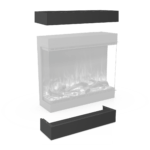
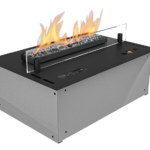
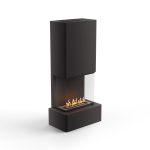
Product used: Planika FLA4 automatic ethanol fireplace
Application: Custom-built furniture integration within historic architecture
The Challenge: Fire Integration in a Heritage Building
Historic buildings often impose strict restrictions on construction, ventilation, and structural modifications. In this project, the architect pursued an elegant aesthetic that respectfully references the historic surroundings and the landscape beyond. In the historic apartment, the goal was to evoke the motifs visible outside, with the fireplace designed to complement the interior rather than dominate it.
Key constraints included:
- No possibility of installing a traditional chimney or flue
- Preservation of structural and historic elements
- Integration within custom-designed furniture and wall compositions
- Coherence between fireplace wall and the panoramic views of the Seine and Paris skyline
The fireplace was designed to be both functional and decorative, while preserving the purity of the design.
The Design Vision
The design reflects a commitment to respecting the local context while employing innovative solutions to enhance the site’s unique features, including structural modifications, custom joinery, and furniture designed specifically for each space.
“The idea was to celebrate the charm of the Parisian view at the heart of the living room, with the contemporary fireplace as its focal element.”
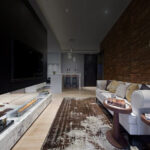
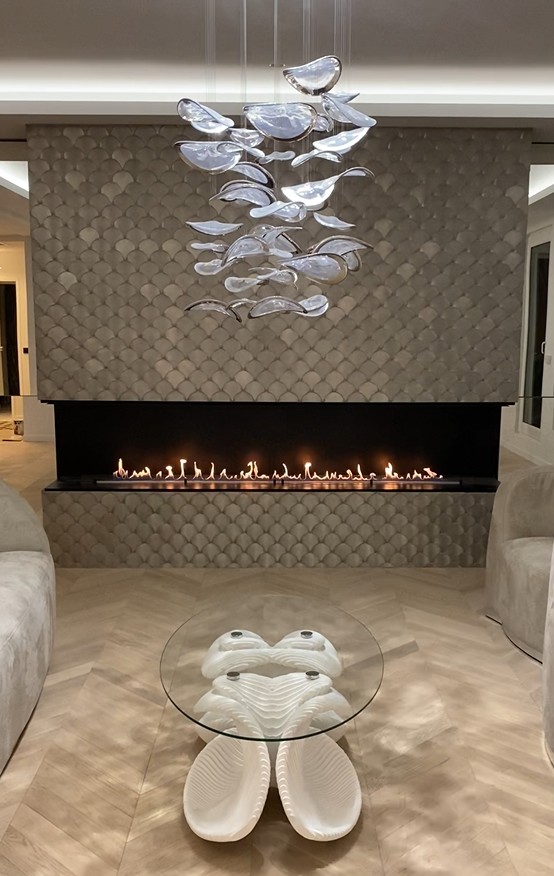
Custom wave-shaped furniture was designed around the fireplace, echoing the flow of the river while framing the panoramic city view. Metallic tile finishes around the fire introduced a modern layer that contrasted with the historic architecture, creating a balanced dialogue between past and present.
Why the Automatic Ethanol Fireplace Was the Right Solution
1. No Chimney or Ventilation Required
Automatic ethanol fireplaces operate without a flue or chimney, making them suitable for historic buildings where structural changes are restricted.
This allowed the fireplace to be installed without modifying the original structure.
2. Minimal Installation Requirements
Unlike traditional fireplaces, installation required only an electrical connection.
“They only require a power outlet. No construction work is needed to integrate a Planika fireplace.”
This significantly reduced installation time and ensured compliance with preservation requirements.
3. Seamless Integration into Custom Architecture
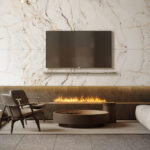
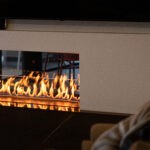
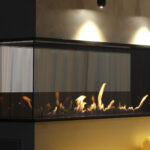
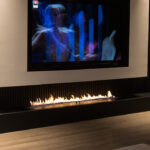
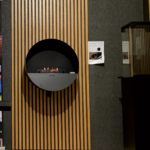
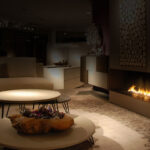
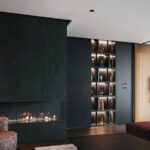
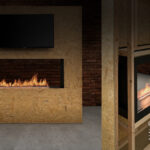
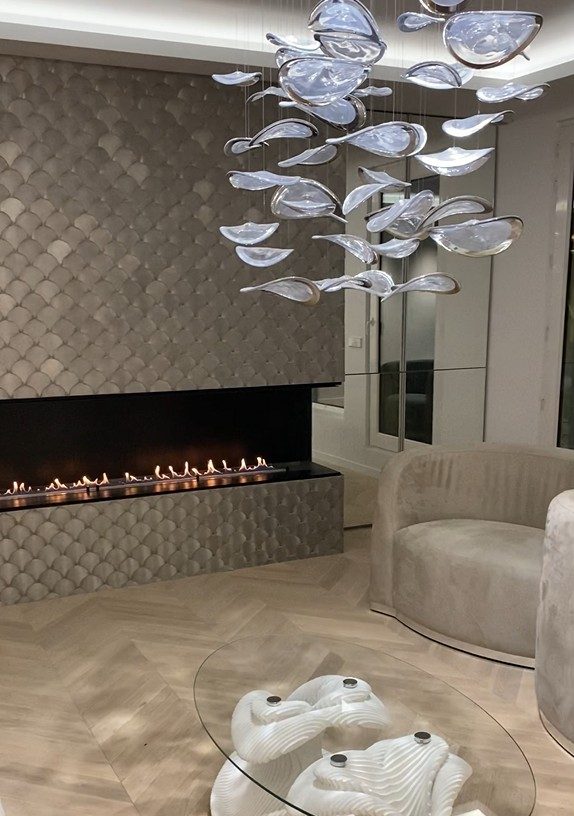
The linear fire feature was integrated directly into the custom-designed wall, becoming an integral part of the architectural composition. Decorative details gain a completely different presence when the flame is embedded within them rather than added onto them.
4. Creating a Contemporary Atmosphere
By introducing a concise and carefully integrated contemporary fire feature into this centuries-old apartment, David Bitton has gracefully reimagined the home for a new generation.
The Result
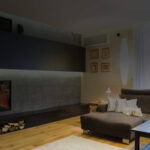
By choosing a BEV ethanol fireplace from Planika, the designer gained greater control over the space, clarity of form, and the confidence that his vision would remain intact without technical compromise. The fire was discreetly integrated into the interior decor, allowing the wall cladding to gain depth and radiance as a subtle focal point.
Located beside the window overlooking the city, the fireplace visually relates to the historic view outside while anchoring the interior atmosphere with real flames. The result is a quiet dialogue between historic architecture and contemporary living.
Key outcomes:
- Preservation of historic building integrity
- Fully integrated fireplace within custom furniture
- Strong visual focal point aligned with the architectural vision
- Modern fire feature compatible with strict heritage regulations
The result is a living space where modern functionality and historic character coexist seamlessly.
About the Designer: David Bitton
David Bitton leads db design, an architecture and interior design studio operating in France and internationally. His work is influenced by Californian modernism and architects such as John Lautner and Richard Neutra.
He studied architecture at the École des Beaux-Arts in Paris and California Polytechnic State University. His experience includes restoration of historic villas and luxury hospitality projects, with a focus on balancing preservation and contemporary design.
Key Takeaways for Architects and Designers
Automatic ethanol fireplaces enable fire integration in projects where traditional fireplaces are not feasible, including:
- Listed and heritage buildings
- Apartments without chimney access
- Renovation projects with structural limitations
- Custom furniture and wall integrations
- High-end residential and hospitality interiors
Need Support for Your Project?
Planika specialists work with architects and designers to integrate automatic fireplaces into custom interiors, including heritage and restricted buildings.