 +48 52 364 11 60


How Modern Outdoor Living Spaces Are Designed
Outdoor living is no longer treated as an accessory to architecture. In 2026, it becomes a fully integrated spatial concept—designed with the same discipline, logic, and material awareness as interior architecture. The focus shifts from decorative patios to functional outdoor living zones that support everyday life: cooking, gathering, relaxing, and staying warm across seasons.
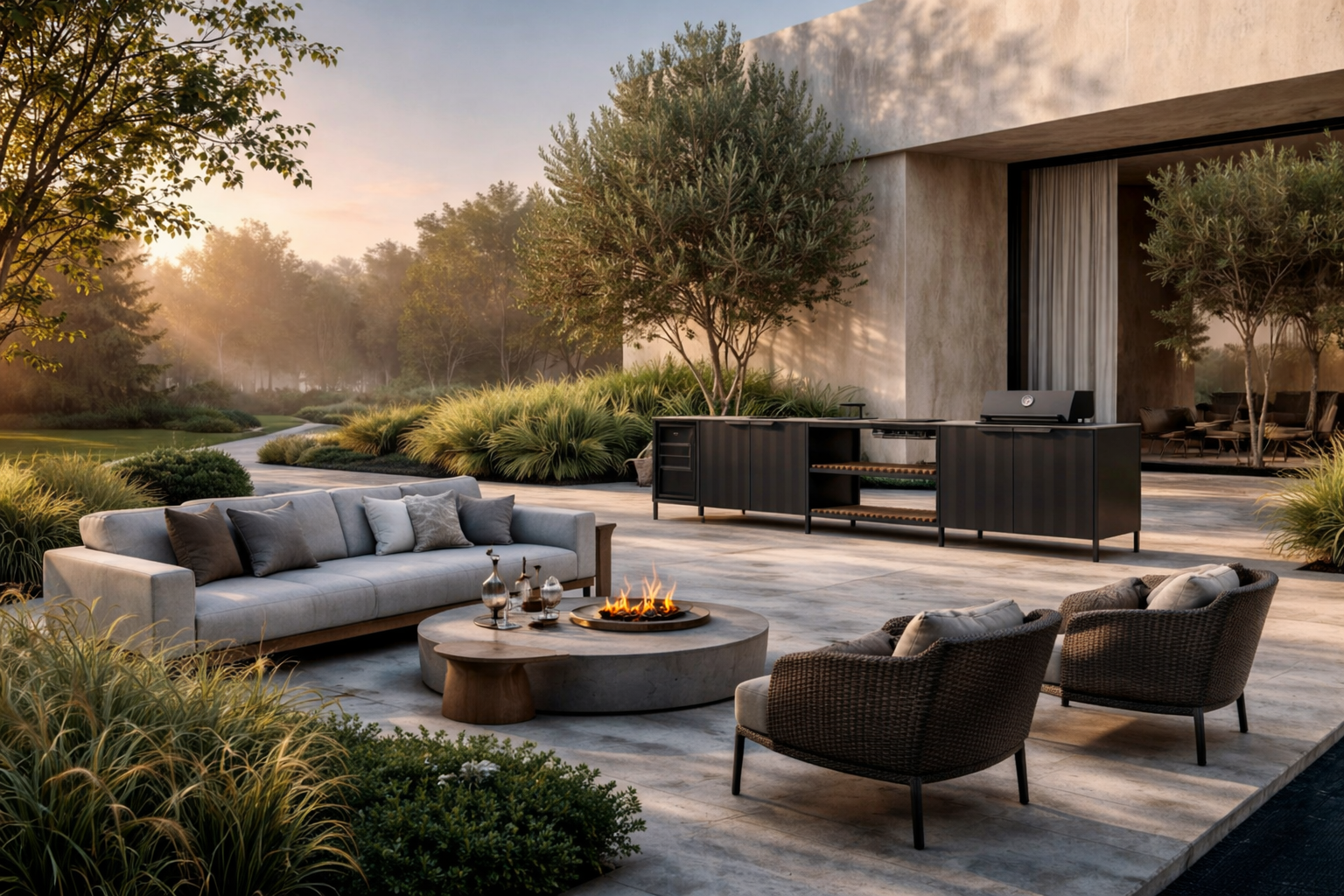
This evolution reflects changing lifestyles, longer outdoor seasons, and a growing demand for spaces that connect architecture, landscape, and social life into one coherent environment.
The Space Between House and Garden as a New Architectural Standard
What the “In-Between Space” Means in Contemporary Architecture
A new category of space is emerging between the interior and the outdoors. Positioned between the living room and the garden, this in-between zone is neither fully enclosed nor fully exposed. It forms a spatial bridge that extends the home’s usable area while maintaining a strong relationship with nature.
Rather than being treated as leftover space, it is now designed deliberately—recognized by architects as an area with high functional and experiential value.
Extending Interior Quality into Outdoor Living
Unlike traditional terraces, modern outdoor living spaces carry the same design language as the interior. Proportions, materials, and detailing are selected to create continuity rather than contrast. The goal is not to replicate the interior, but to translate its quality into an open environment.
Furniture, kitchens, and fire features are chosen for how they age, how they interact with architecture, and how they support everyday use—not just visual impact.
Natural Light, Landscape, and Weather as Design Elements
Outdoor living zones remain fully exposed to daylight, seasonal changes, and views. Instead of shielding users from nature, these spaces are designed to work with it. Light, wind, and temperature variations become part of the experience rather than a limitation.
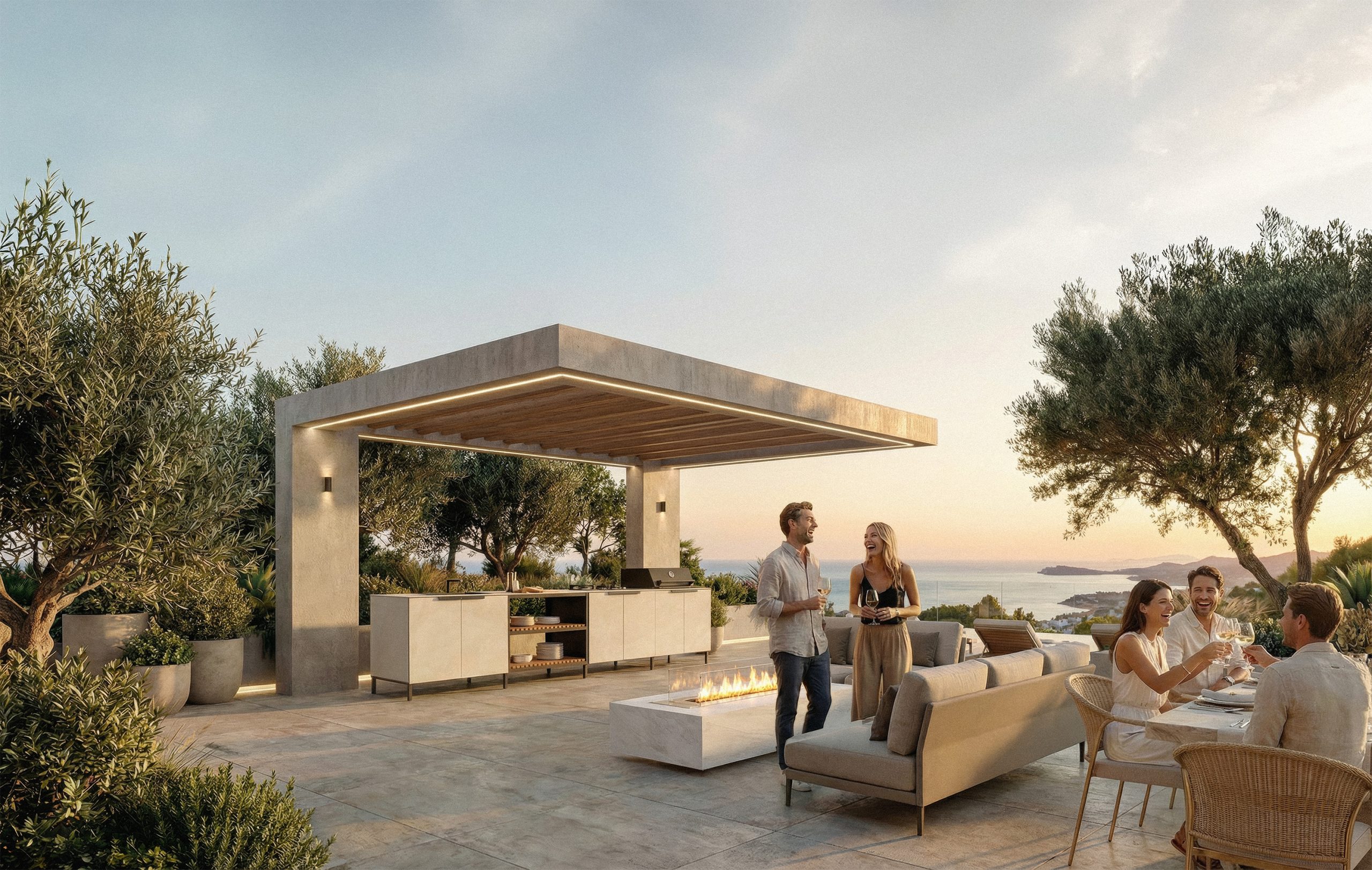
Designing Outdoor Living Spaces in 2026
The Outdoor Circulation Loop as a Planning Principle
Outdoor layouts increasingly follow a clear circulation logic:
cooking → gathering → lounging → warming up.
This sequence mirrors how people naturally move through space during social activities. Planning outdoor zones around this loop improves usability, flow, and comfort without adding unnecessary complexity.
Digital Tools Supporting Early-Stage Design Decisions
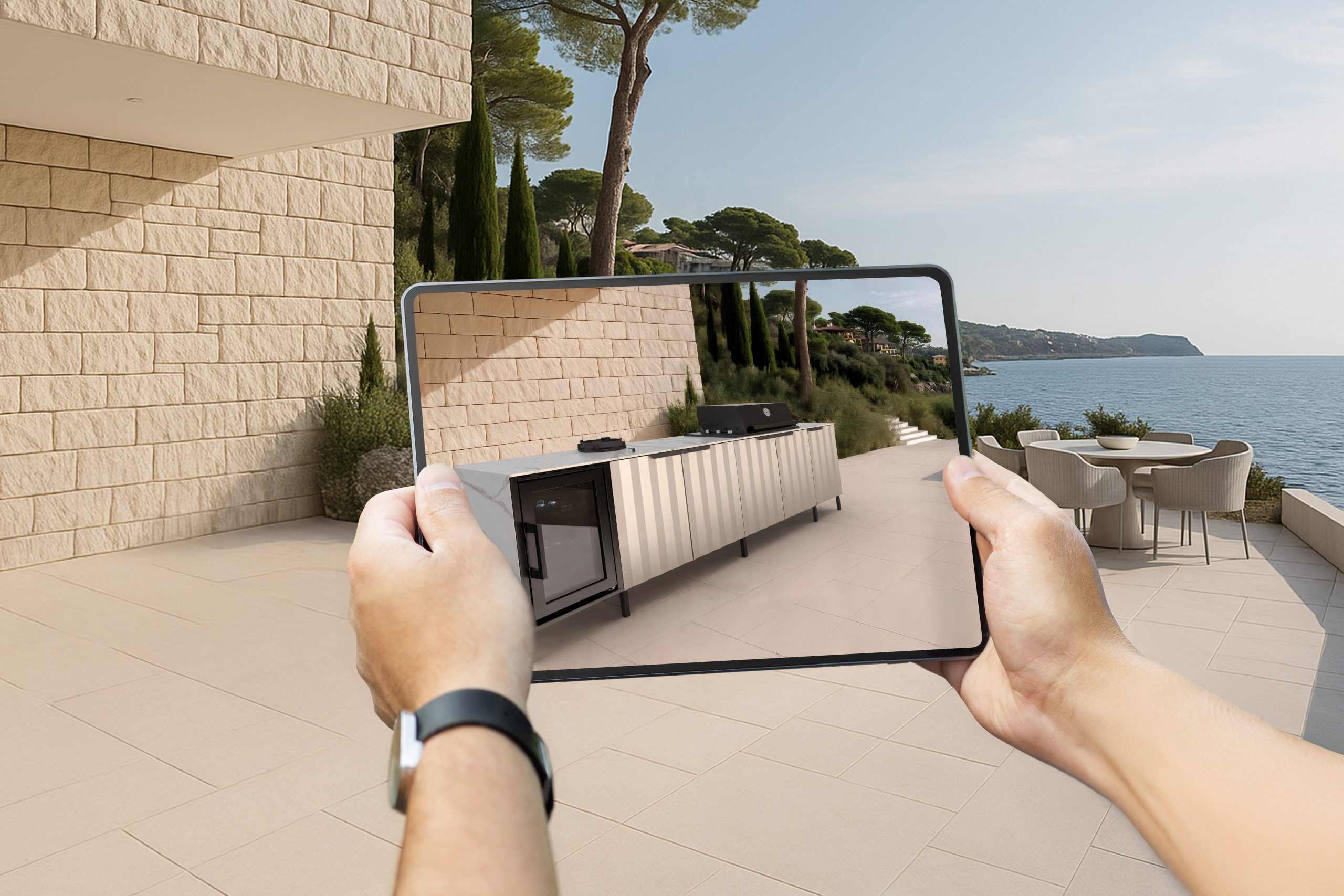
Advanced digital tools play a growing role in outdoor planning. Mobile AR application, such as the one offered by Q-boo, allow designers and clients to test layouts directly on site, assessing scale, proportions, and positioning before construction begins. This reduces errors, supports informed decisions, and aligns expectations early in the process.
The Outdoor Kitchen as the Structural Core of Outdoor Living
Modular Design Replacing Fixed Outdoor Kitchen Layouts
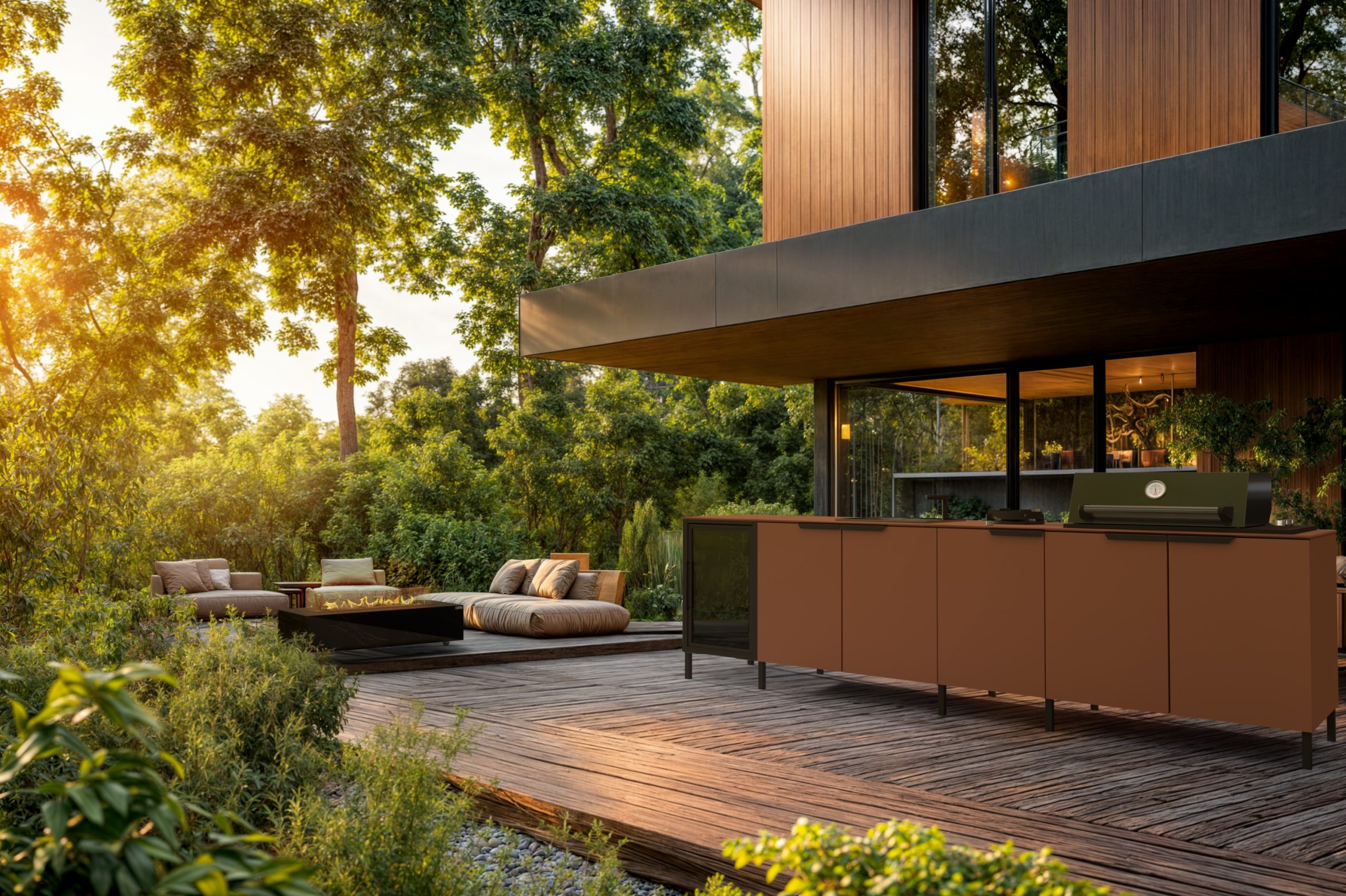
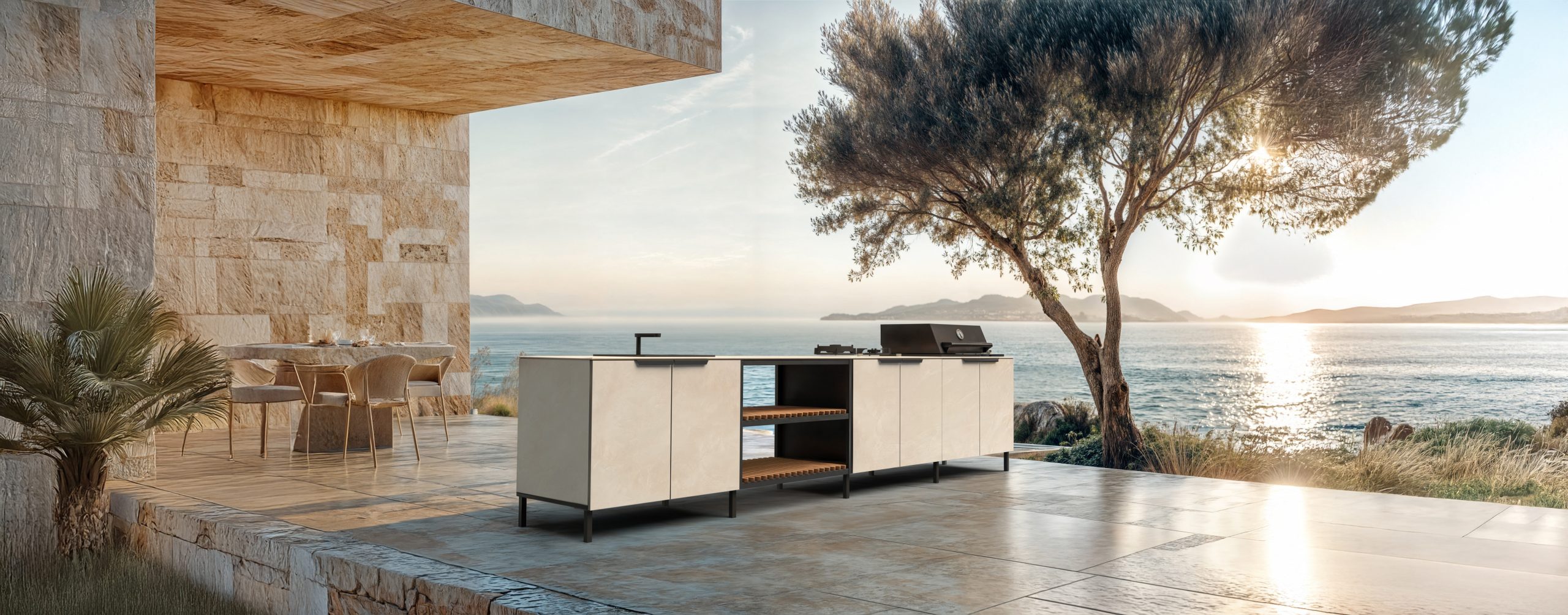
Rigid, wall-bound outdoor kitchens are becoming obsolete. In their place, modular systems allow kitchens to adapt to different spaces, lifestyles, and future needs. Designed as a system of independent modules, Q-boo lines can be expanded, reduced, or rearranged without structural intervention.
This flexibility is essential in projects where outdoor areas evolve over time.
Kitchens Designed Around Real Cooking Habits
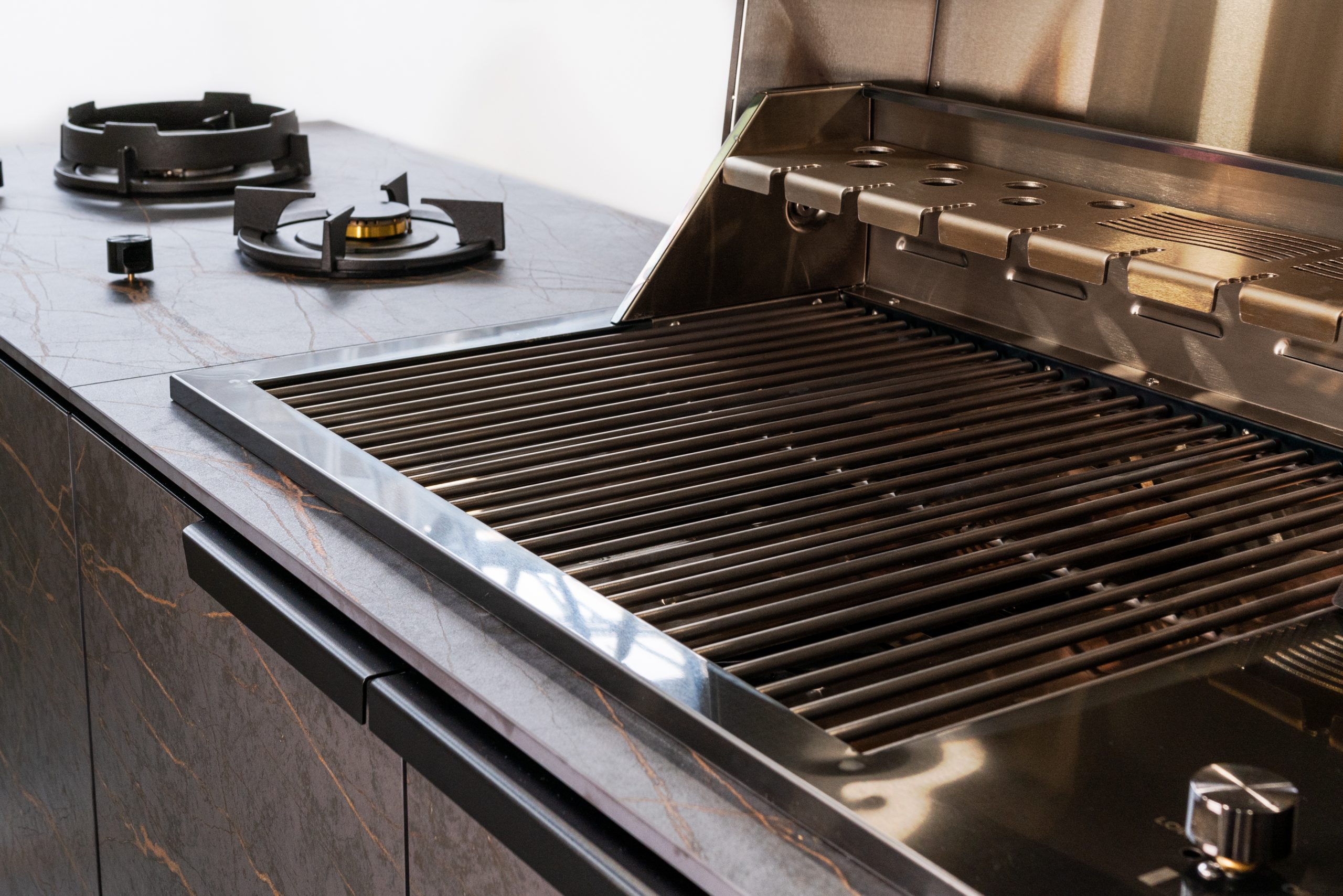
In 2026, outdoor kitchens are not designed around predefined sets, but around how people actually cook. Side burners or the iconic egg-shaped charcoal grill —add functional depth without forcing unnecessary complexity.
Adapting Outdoor Spaces Across Seasons and Events
A modular kitchen enables a terrace used for quiet morning coffee to transform into a space for large gatherings in the evening. The layout supports both intimate and social scenarios without requiring permanent changes.
The Kitchen Island as a Social and Functional Center
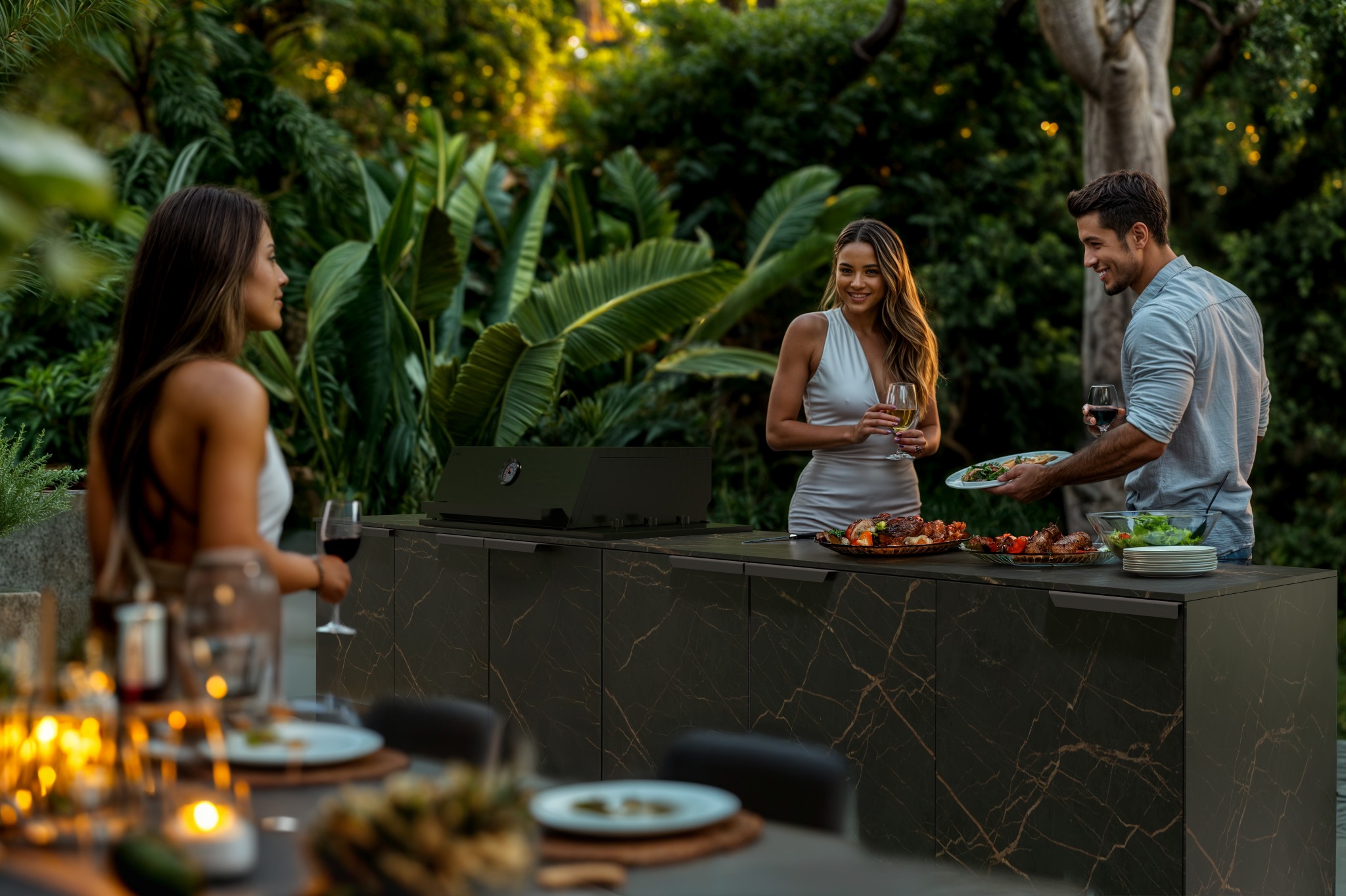
Long, island-style kitchens serve multiple purposes simultaneously. They function as preparation surfaces, cooking zones, dining areas, and social hubs—encouraging interaction rather than separating the cook from guests.
Gathering Zones Beyond the Kitchen
Fire and Live Cooking as Natural Social Anchors
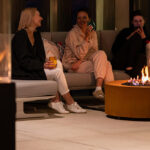
People instinctively gather around fire and food. Live cooking and open flames create focal points that draw people together, making them central elements of modern outdoor living.
Visual Consistency Across Outdoor Elements
Designers increasingly value cohesion. Fire features, heaters, and kitchens are selected as part of a unified ecosystem, sharing materials, proportions, and finishes. This approach avoids visual fragmentation and strengthens architectural clarity.
Modern Fire Features in Outdoor Living Spaces
Fire as Atmosphere and Light Source
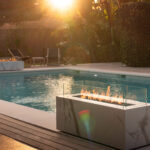
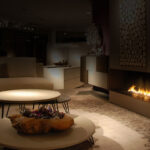
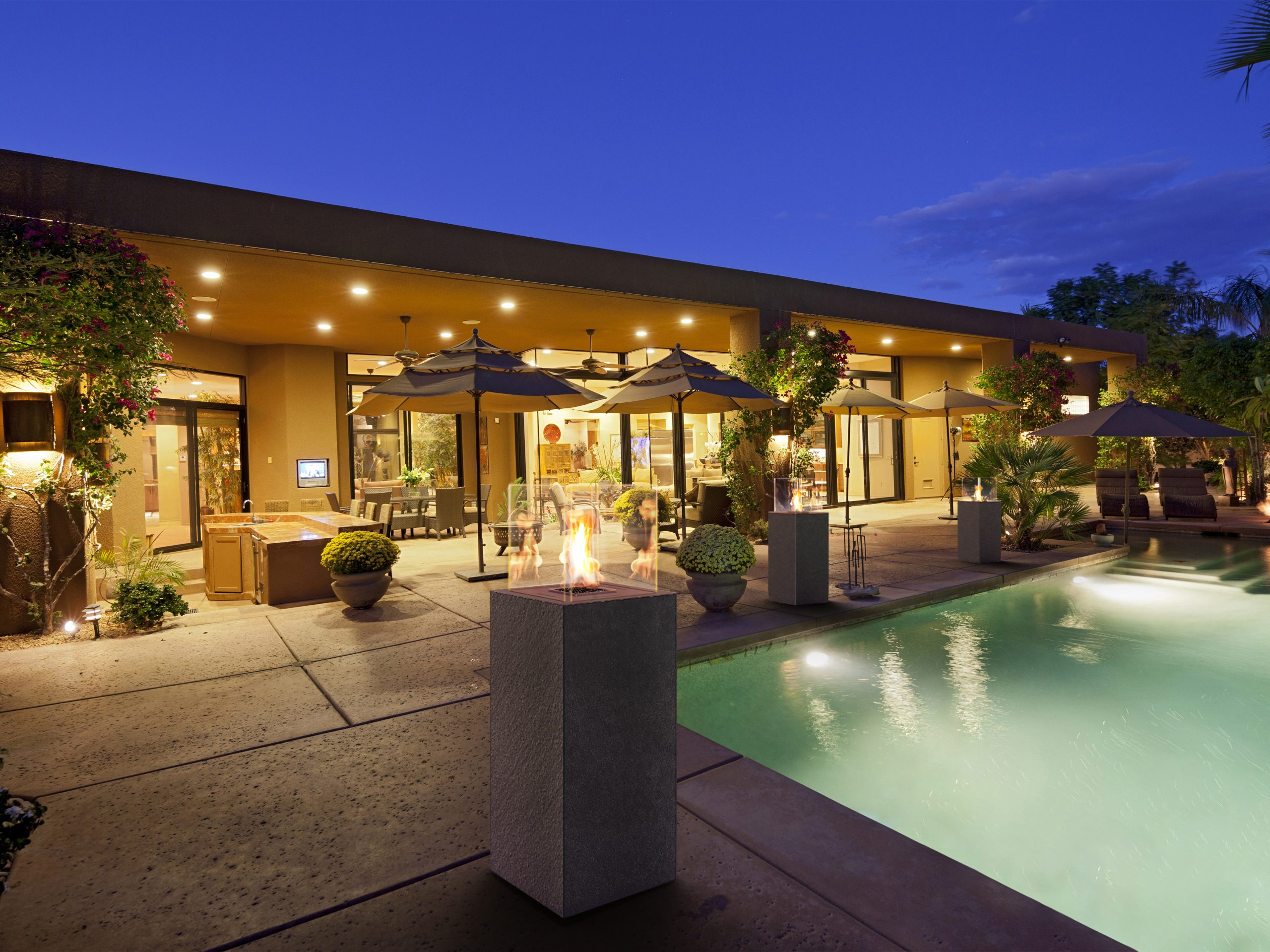
Beyond heating, fire creates unique lighting conditions. Depending on height and configuration, flames can provide body-level warmth or serve primarily as ambient light—similar to candlelight or moonlight, but stable and controllable.
Portable and Built-In Fire Features
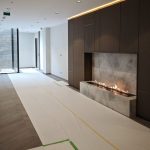
Both portable and permanent solutions have their place. The choice depends on context, fuel type, and desired flexibility. Modern systems eliminate smoke and odors, improving comfort and usability compared to traditional wood fires.
Fuel Options and User Comfort
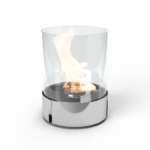
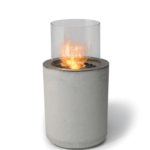
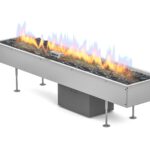
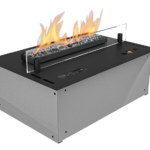
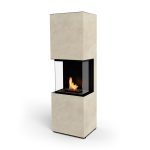
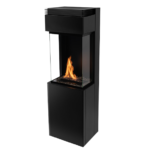
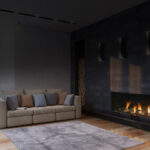
Contemporary fire features are available in natural gas, propane, and alcohol-based biofuel configurations, allowing architects to select the most suitable solution based on site conditions and project requirements. These systems deliver clean combustion, predictable performance, and precise flame regulation, enabling controlled heat output and atmospheric effect. Whether integrated into a fixed gas installation, supplied via an LPG cylinder, or specified as a modern bioethanol unit, the Planika Outdoor Collection offers design flexibility and technical freedom across a wide range of architectural contexts.
Fire Height and Visual Impact
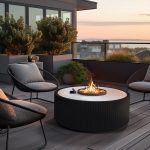
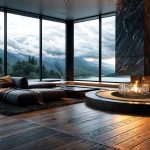
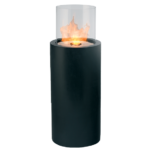
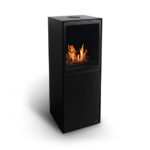
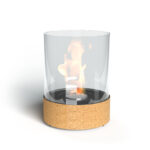
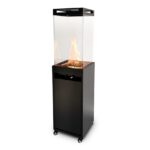
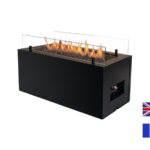
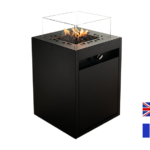
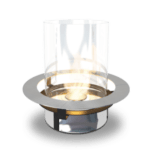
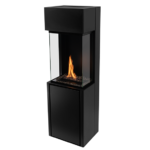
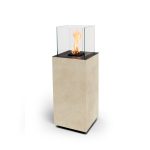
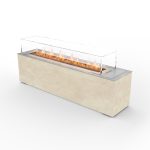
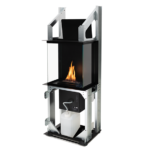
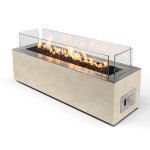
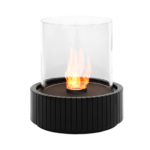
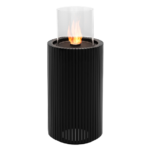
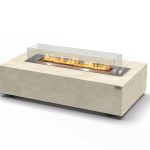
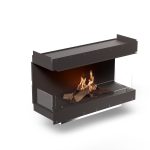
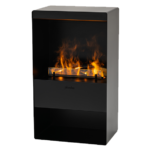
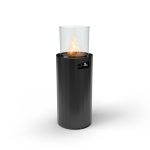
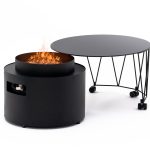
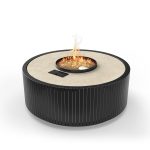
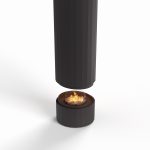
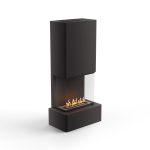
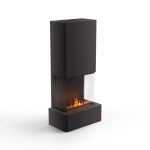
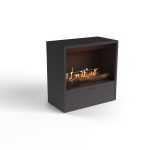
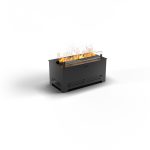
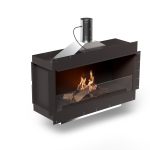
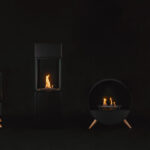
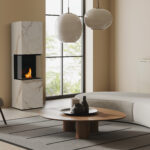
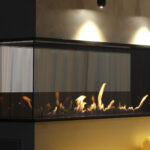
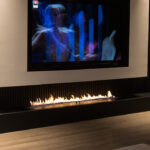
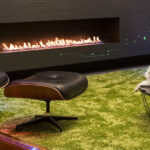
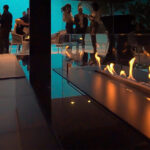
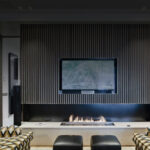
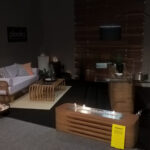
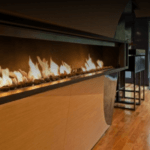
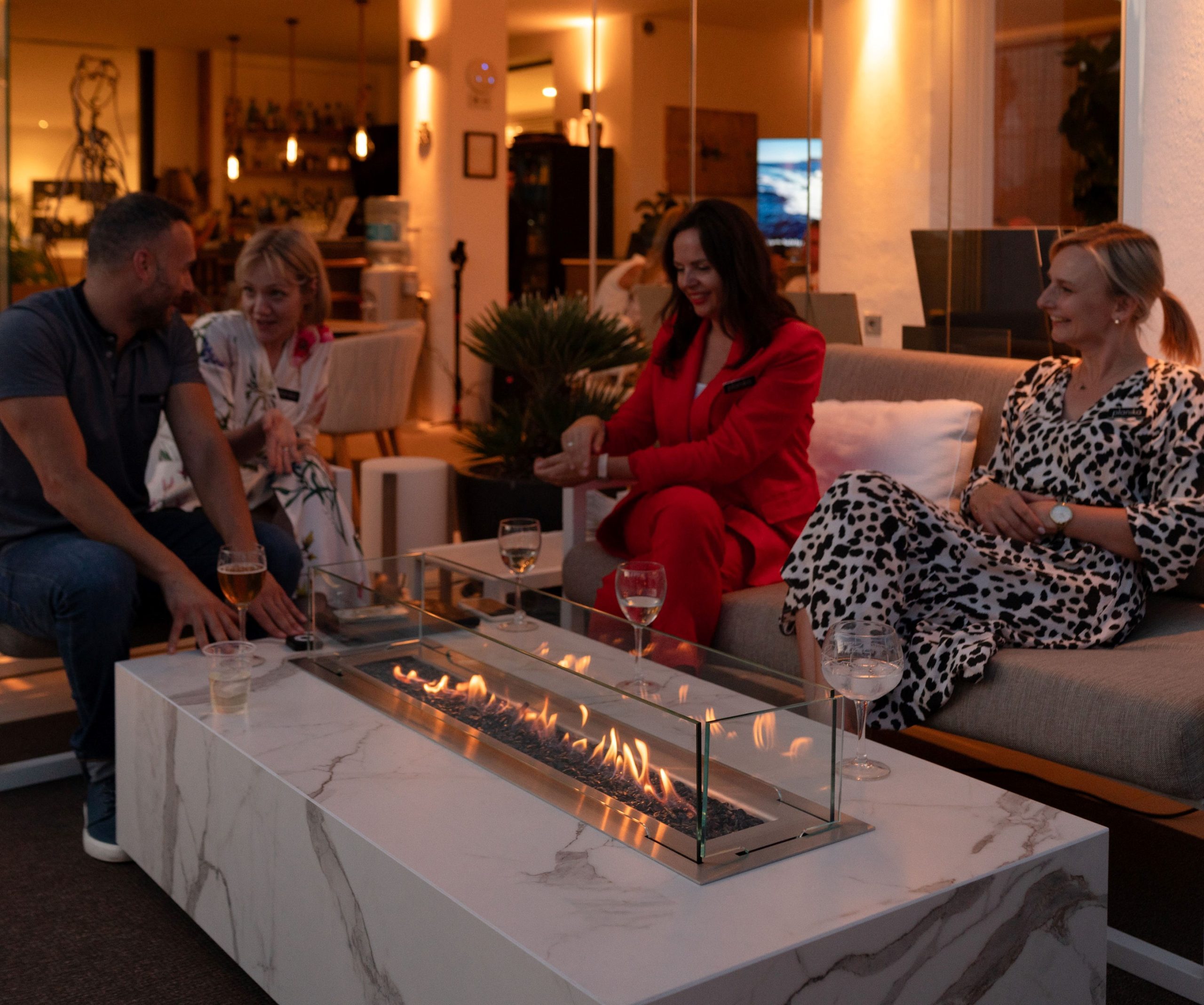
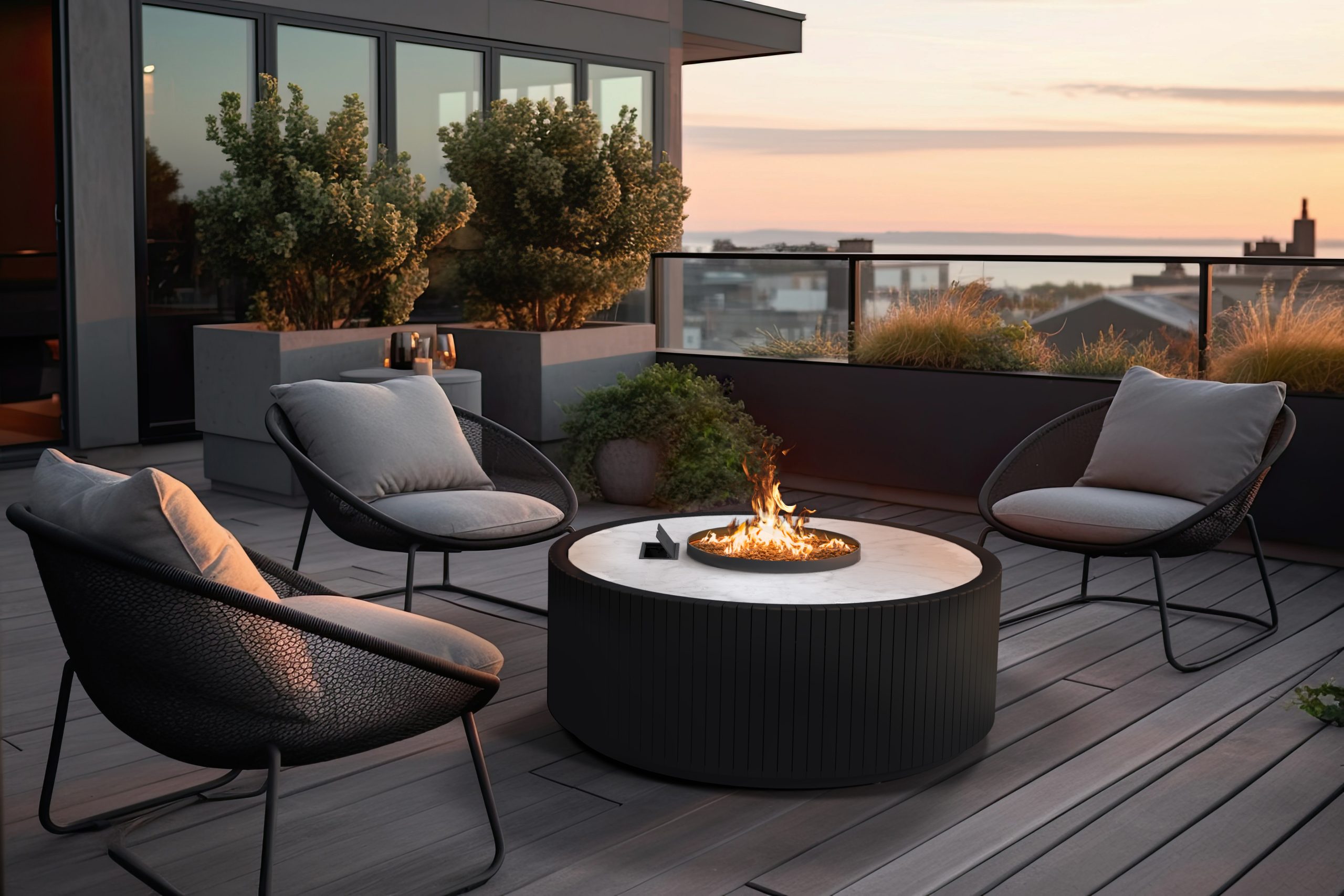
Lower fire features, typically around 400 mm in height, are designed to deliver effective radiant warmth, making them suitable for seating areas and close-range interaction. Cabo Table is a ready-made furniture piece conceived as a monolithic, sculpted block with real flames. Discreetly integrated castors provide mobility, while the automatic refuelling system reduces both time and maintenance requirements. Taller models with integrated glass screens place greater emphasis on visual impact and light reflection, contributing primarily to ambience rather than heat output. The Porto model is a portable, vent-free fire feature that, thanks to its clean-burning technology and high-quality finish, can transition naturally between indoor and outdoor environments. It can be specified as an outdoor accent for atmospheric lighting or repositioned indoors to introduce a fireplace-like ambience without the need for permanent installation.
Fire Features as Functional Surfaces
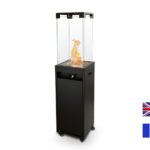
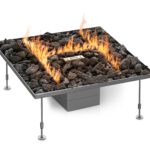
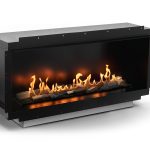
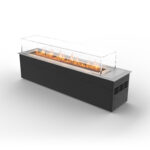
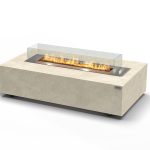
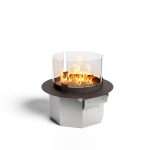
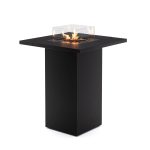
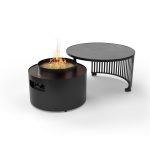
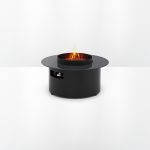
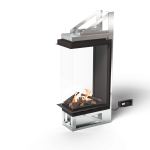
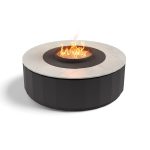
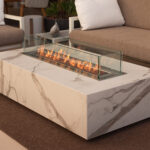
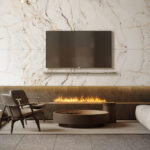
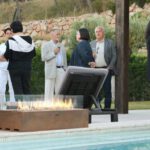
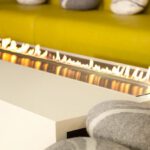
Integrated rims extend the function of the fire feature, transforming it into a usable tabletop providing space for drinks or snacks. The Stella Table gas fire is defined by thin yet strong, high-performance surfaces that require minimal maintenance supporting long-term use in both residential and commercial settings.
Materials and Aesthetics in Outdoor Living Design 2026
Contrasting Materials for Depth and Character
Rather than uniform surfaces, modern outdoor spaces rely on material contrast. Natural wood details, structured panels, and stone surfaces are combined to introduce warmth and visual depth.
Variety of Surfaces Instead of Flat Uniformity
A variety of materials prevents the outdoor spaces from becoming sterile and overloaded. The result is a balanced composition that feels expressive without becoming visually overwhelming.
Longevity Over Fashion in Outdoor Design
Pantone Colour of the Year 2026: Cloud Dancer
While trend forecasts may define colors for a given year, outdoor kitchens and fire features are conceived as long-term architectural elements. Their finishes are selected to align with façades, paving, and surrounding architecture rather than short-lived palettes.
Architectural Consistency as a Priority
Color and material choices are made to reinforce overall architectural coherence. This ensures the space remains relevant and visually stable for decades.
Durability as a Non-Negotiable Requirement
Outdoor materials must withstand UV exposure, temperature fluctuations, and humidity. Resistance to fading, cracking, and corrosion is essential.
Advanced Materials for Long-Term Performance
Modern outdoor systems increasingly use marine-grade stainless steel and sintered stone surfaces. These materials do not absorb water, resist environmental stress, and require minimal maintenance while maintaining structural integrity over time.
The Future of Outdoor Living Design Beyond 2026
Modularity and Mobility as Core Principles
Outdoor spaces designed to endure prioritize adaptability. Modular systems and portable elements allow layouts to evolve alongside changing needs.
Architectural Systems Instead of Seasonal Products
Timeless outdoor living environments are built around architectural collections rather than trend-driven products. This system-based approach ensures clarity, flexibility, and long-term relevance.
Planning an upcoming project? Get expert support for integrating modular kitchen and fire units into architectural structures: Professional Guidance